

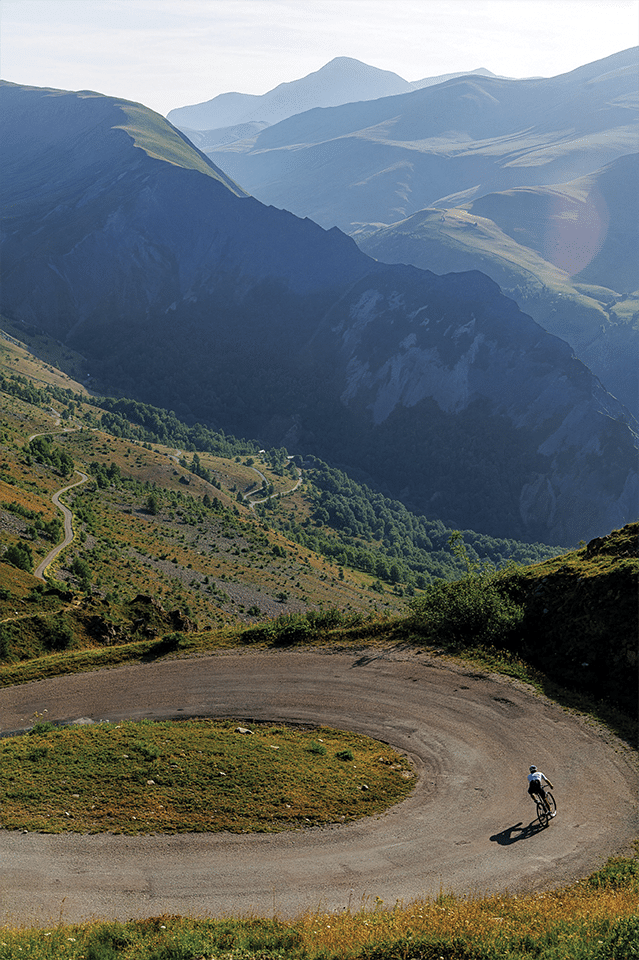
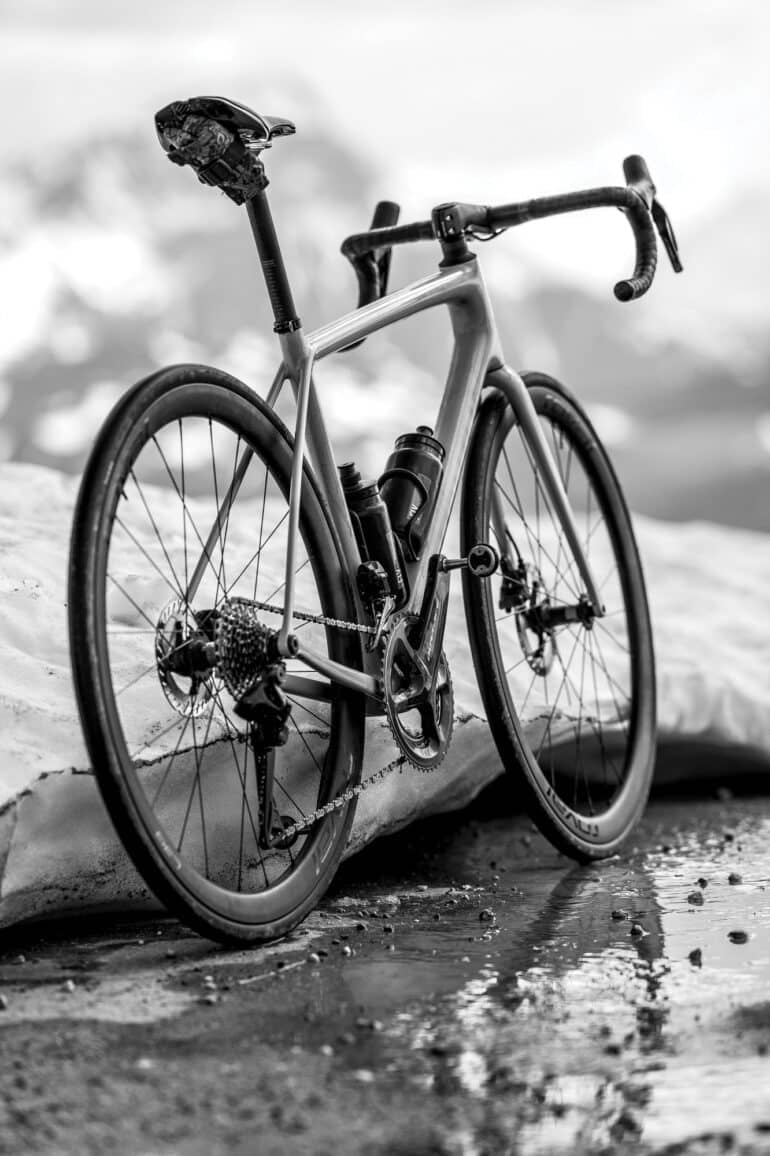
I’ve had the chance to ride an S-Works Aethos 2 for the last five months, accumulating a solid 50,000 meters (almost 165,000 feet) of elevation gain all around the Alps. The bike was lent to me by Specialized for an upcoming exploration project and it wasn’t supposed to be a review. But, ultimately, my experience with the Aethos 2 was too good not to be shared.
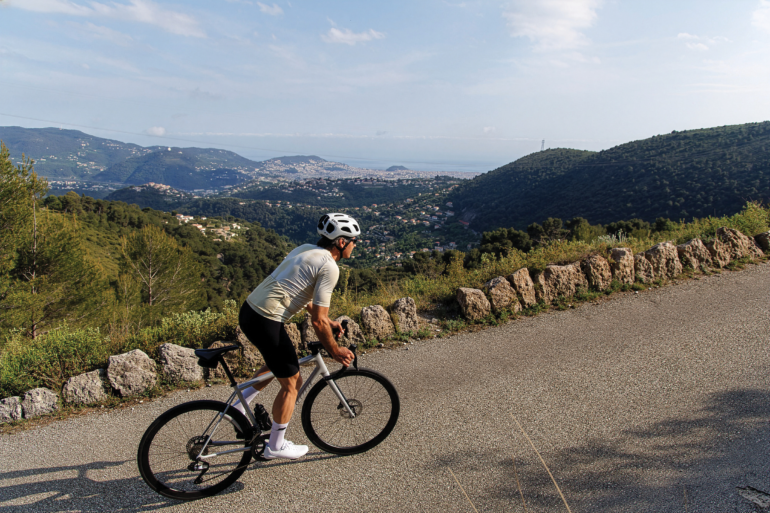
One of the first climbs I did on the Aethos 2 was the classic Col de la Madone above Menton on the Mediterranean; and from there I never stopped climbing on bigger, higher and more remote roads, discovering a bike that’s a category in itself.
Its flyweight is as obvious as the Madone is a smooth road climb. But not all climbs are perfectly paved, and it’s when roads became really bad that I came to appreciate the Aethos 2. You could think it’s for something usually called comfort or ride quality…but it’s not. Or at least it is, but as a biproduct of its unusual capabilities. To be honest, I had never been looking for comfort in bikes—or aerodynamics either. Instead, I am looking for lightness, well-tuned (to me) climbing efficiency and overall capability.
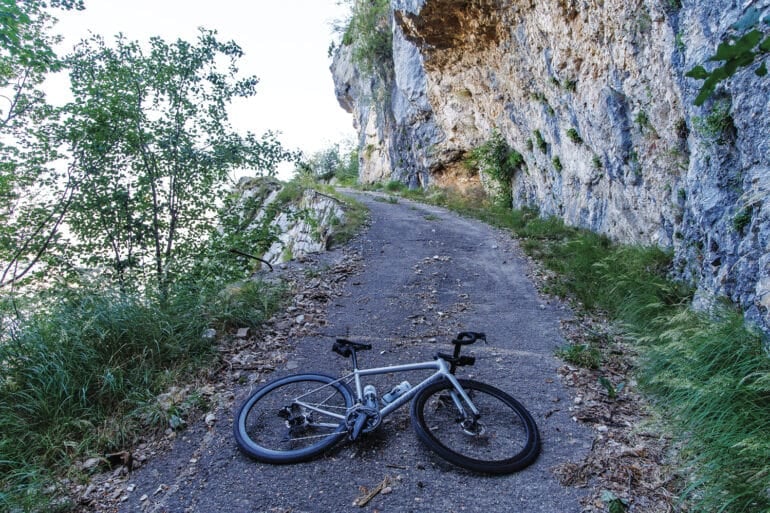
In the context of alpine cycling, capable is a mix of downhill handling, a wide range of gears and the biggest possible tires without being a gravel bike. And it is where the Aethos 2 is way more different from the original Aethos. With its ability to use 35mm tires, the Aethos 2 has opened, or at least eased, the access to many less-traveled mountain passes, rock-scattered climbs or unpaved monsters like the Colle delle Finestre, where traction and rolling resistance are key.
FULL STORY IN PRINT


