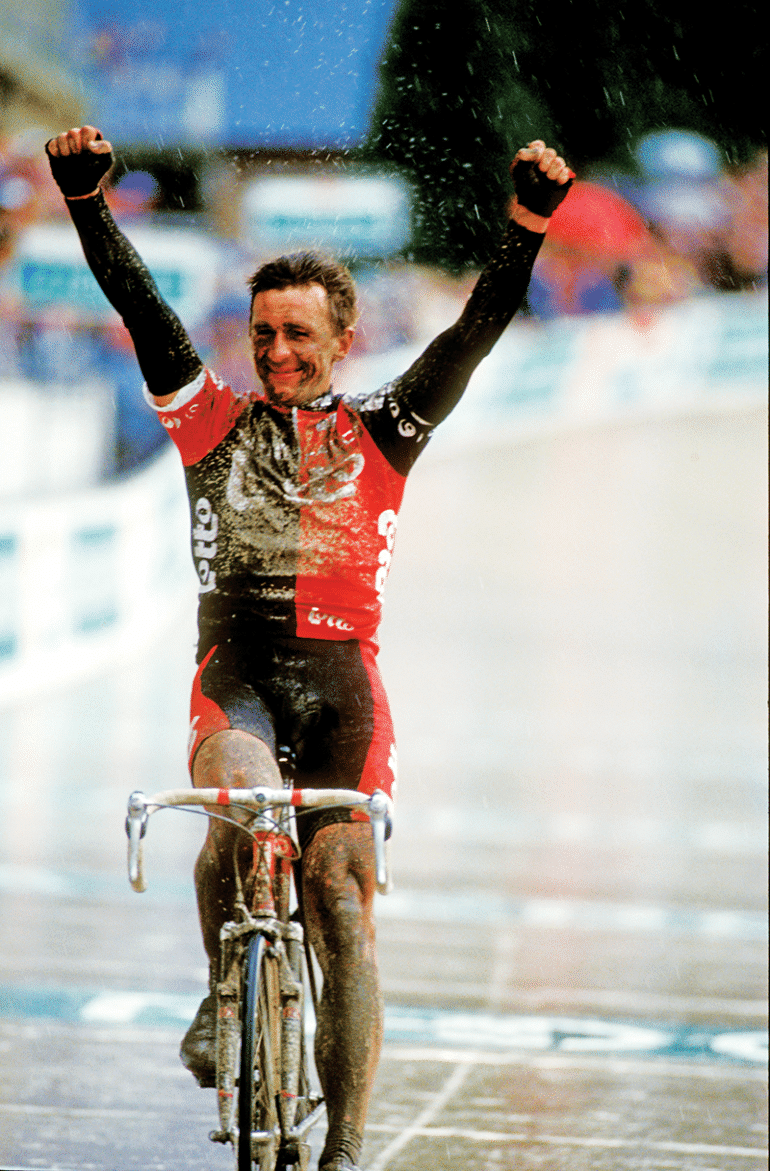
It was the night before the 1994 Paris–Roubaix. Outside the cozy, no-frills Le Cahors café on the freezing Place de l’Hôtel de Ville in Compiègne, the local juniors were racing with youthful abandon, whipping around the tight square on skating-rink-like tarmac. There was a crash every few minutes, but the teenagers picked themselves up and kept going as a freezing drizzle threatened to turn to sleet. We watched them through the misted café windows, sipping brackish beers.
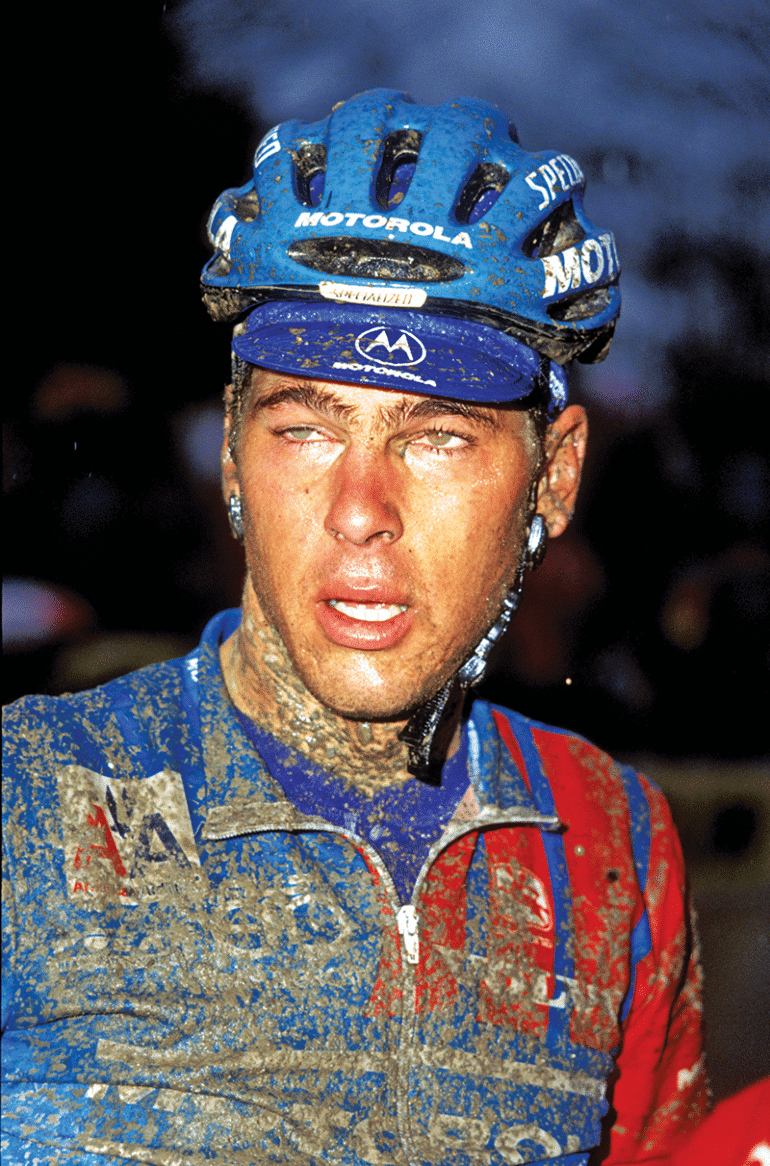
Across town, on the other side of the Oise River, George Hincapie and his Motorola teammates—including Frankie Andreu, Steve Bauer and Sean Yates—were sitting down to dinner at the Hôtel de Flandre. Hincapie was the wide-eyed Roubaix debutant, heavily reliant on Motorola old hands Bauer and Yates to guide him through his first “Hell of the North” experience.
In a field stacked with classics legends like Johan Museeuw, Andrei Tchmil, Adrie van der Poel, Jacky Durand, Eric Vanderaerden—and even a Sean Kelly in the twilight of his career—the 20 year old American was an unknown, in his first full season with the U.S. team. Museeuw was the pre-race favorite, narrowly beaten to victory at the previous weekend’s Tour of Flanders, his home race, by Gianni Bugno. For the Belgian, that defeat was a huge humiliation and Roubaix offered a quick chance to make amends.
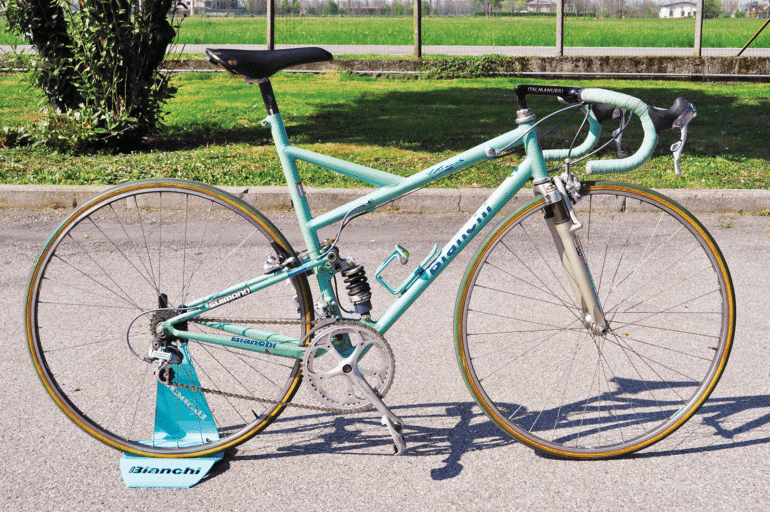
His team was equally anxious, agonizing over equipment choices until settling on using a suspension system, first developed by RockShox and already introduced at Roubaix to significant effect by Greg LeMond’s Team Z. Bauer, too, had sought to benefit from tech innovations. After a narrow second place at Roubaix in 1990, he had ridden the 1993 edition on a long-wheelbase bike with relaxed angles, fitted with RockShox on the front end, that became known as The Stealth. The Canadian’s idea was to generate more power on the unusual-looking frame, but after racing on it he said that it was “not agile” enough. And, as it turned out, it wasn’t fast enough either.
FULL STORY IN PRINT