

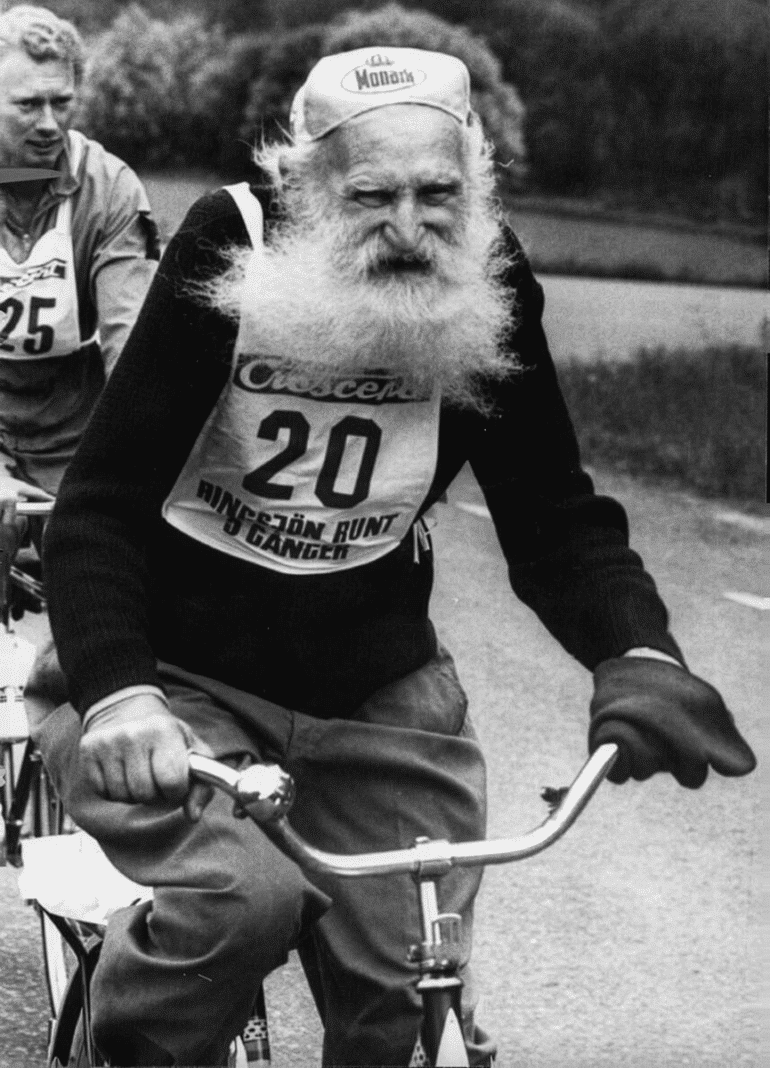
The remarkable story of Gustaf Håkansson. Every family has a favorite tale they dust off whenever children beg for one more story. A century from now, the legend of the long-bearded grandfather who rode from one end of Sweden to the other on a battered bicycle will no doubt fall neatly into that tradition. It has all the makings of an enduring fireside classic. A stubborn hero. A rejected application. A journey so long that retellings will inflate the numbers with each passing year. One person will insist it was a thousand miles. Someone else will argue it was a thousand kilometers. Someone will claim the cyclist was 66. Others will swear he was 100. Such is the nature of a tale that mixes fact, admiration and a little gentle mythmaking.
Yet at the heart of all the exaggerated versions lies a real event. A real race. A real man. And an utterly charming example of what can happen when someone decides that a rule, a rejection letter and 66 years of life experience do not have the final say. This is the story of Gustaf Håkansson, the Swedish folk hero better remembered as Steel Grandpa.
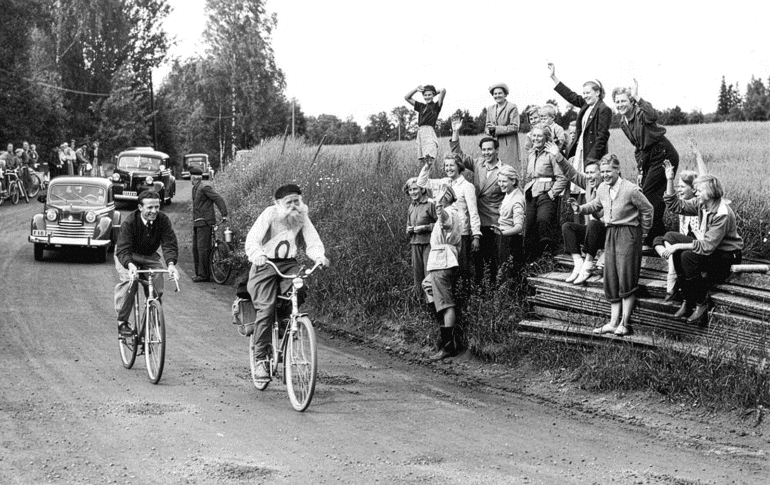
As in most of postwar Europe, long-distance cycling events were popular in Scandinavia as feats of sporting stamina and public spectacle. People lined roadsides to cheer on the lean young men who had trained for vast distances across forests, lakes and farmland. The race in question in 1951 was the toughest in Sweden. Its distance was 1,764 kilometers (1,096 miles), made up of six marathon stages averaging 294 kilometers (183 miles) a day. It was designed to push even seasoned riders to their limits.
Gustaf may not have been an official entrant, but the nation treated him like a champion.
The field was made up of roughly 50 competitors. They were mostly young, well trained and heavily prepared. And they were said to be far from pleased when an elderly man from southwestern Sweden applied to join them.
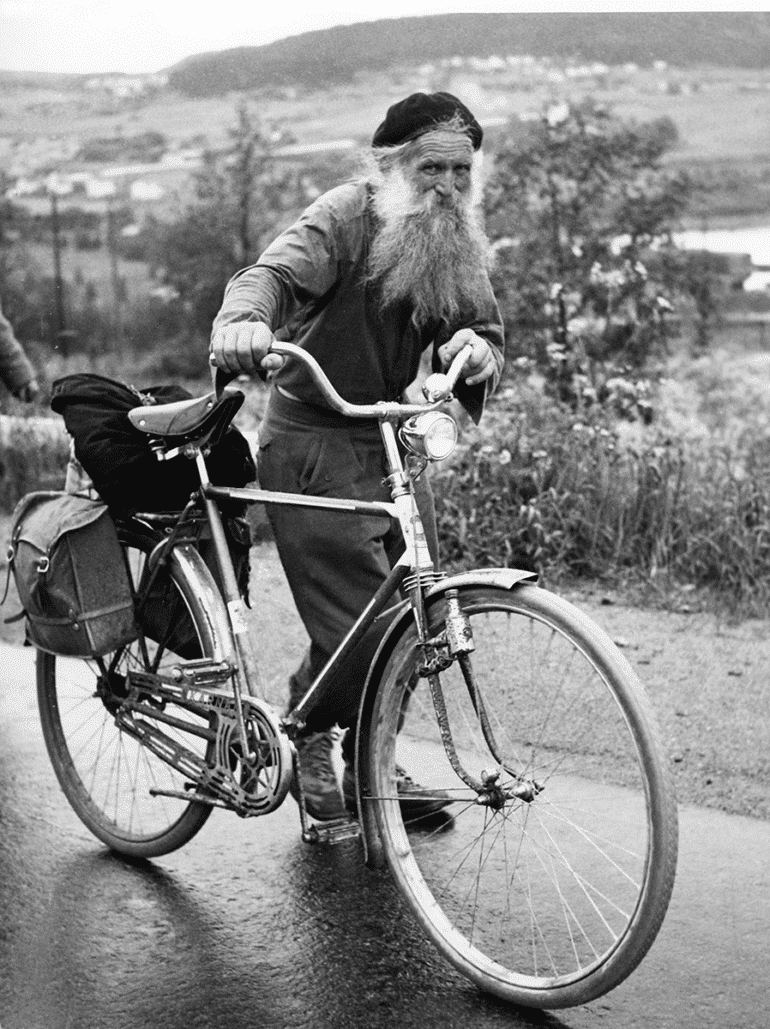
Gustaf Håkansson was born in 1885 in the rural province of Halland. He lived a modest life. Some stories say he was a farmer, working the land, repairing his own machinery, but in other tales he was a bus driver. But they all agree that he cycled whenever there was something to deliver or someone to visit. In most towns he passed through, people knew him as the quiet man who preferred two wheels to most other modes of transport.
By his mid-60s, Gustaf had logged more road miles than most competitive cyclists, simply as part of the way he lived. Riding from farm to village and village to market was a routine. The idea of cycling 1,000 miles was not something he considered outrageous. When he heard that Sweden was hosting one of its most demanding races yet, he submitted his entry without hesitation.
The race committee, however, had other ideas. They rejected him outright. In their eyes, 66 was far too old for an event designed for athletes half his age. Officials said there was a 40-year age limit and insisted that Gustaf lacked the necessary physical strength and stamina. In one interview many years later, a retired race steward recalled that someone on the selection panel joked that Gustaf was more suited to a rocking chair than a racing saddle.
MORE STEEL GRANDPA


