

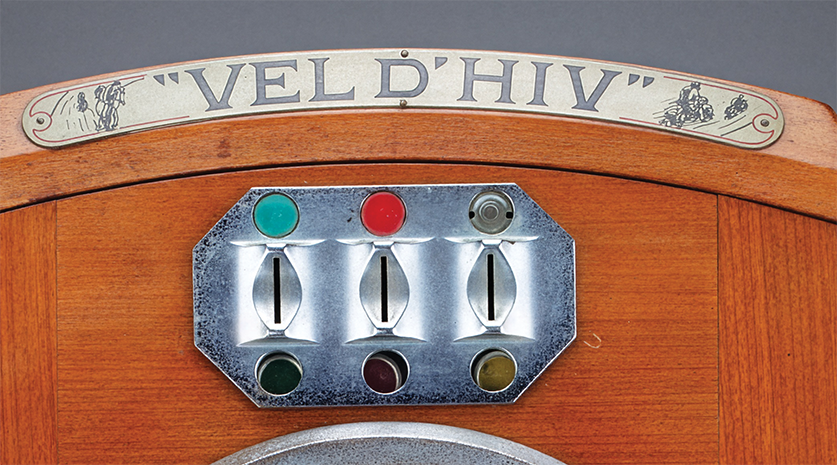

The Velodrome d’Hiver (“Winter Velodrome”) is a name loaded with history. Over its lifetime, the Vel d’Hiv, located in central Paris, hosted basketball, ice hockey, skating, wrestling and other competitive events, but the sport most closely tied to its identity was cycling. This game of spinning cyclists pays homage to that legacy. And the machine’s design celebrates the Vel d’Hiv not just as an arena but also as a cultural institution.
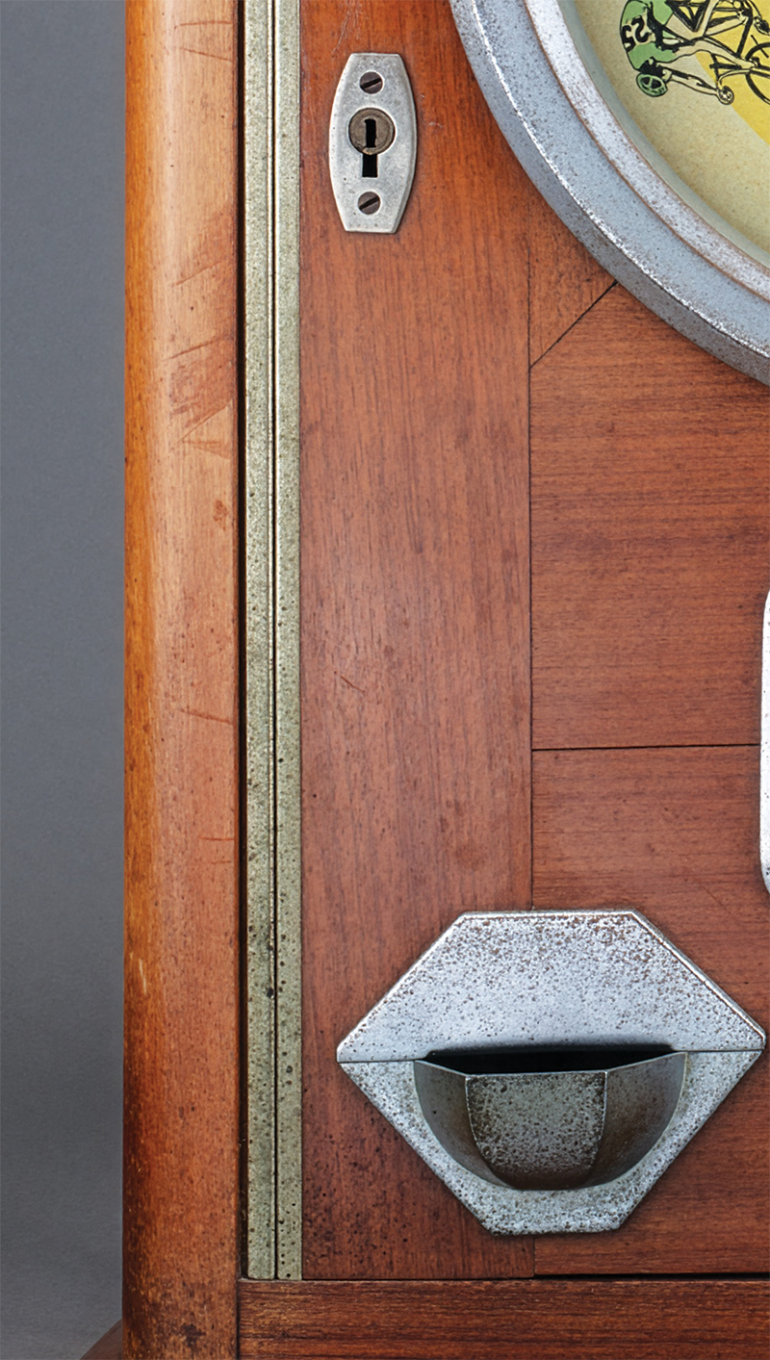
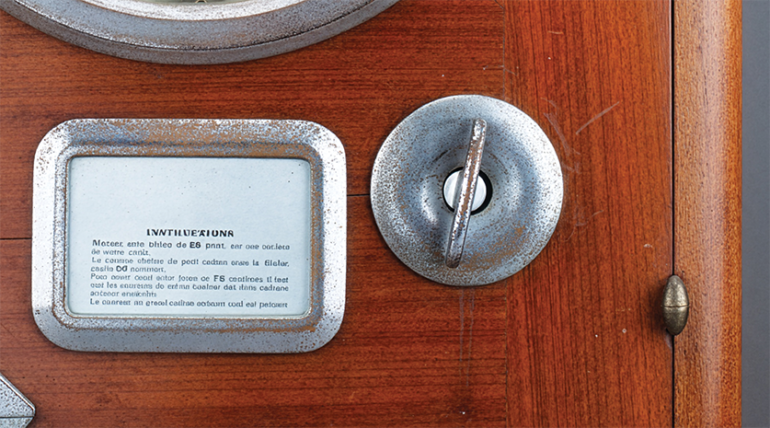
From the 1920s through the end of World War II, the game, like many of its kind, once hung at eye level in smoky bars across France. The wall-mounted format made sense. It kept the coin slots and crank within easy reach and preserved precious floor space for drinking tables, conversation and the quiet shuffle of regulars coming in from the cold. There is not a single volt of electricity inside the machine. No lights. No buzzers. Just the tactile clunk of metal parts, levers engaging, springs pulling tight and the faint rattle of a token landing in the tray.
This is a game of rigged luck dressed in charm. Think of it as barroom roulette. Players made their prediction, turned the crank and listened to the soft whir of spinning wheels, hoping they’d hear the sound of a victory. Most left with nothing but an empty glass. At the top of the machine were three slots: green, red and yellow. You dropped in your 25-centime coin, a sharp clink echoing against the wood paneling, and chose your bike rider.
Once the crank is turned, two wheels in the center spin in response. Each wheel has six positions, two for each color. If the outer wheel lands on the chosen color, the player wins a 25 silver token. If the center wheel lands on the chosen color, the player wins a 50 gold token. If both wheels land on the chosen color, the player wins 75. To skirt gaming laws, the payout came not in the form of cash but in drink tokens, redeemable at the bar, for beverages of increasing value.
GET THE FULL STORY IN PRINT


