

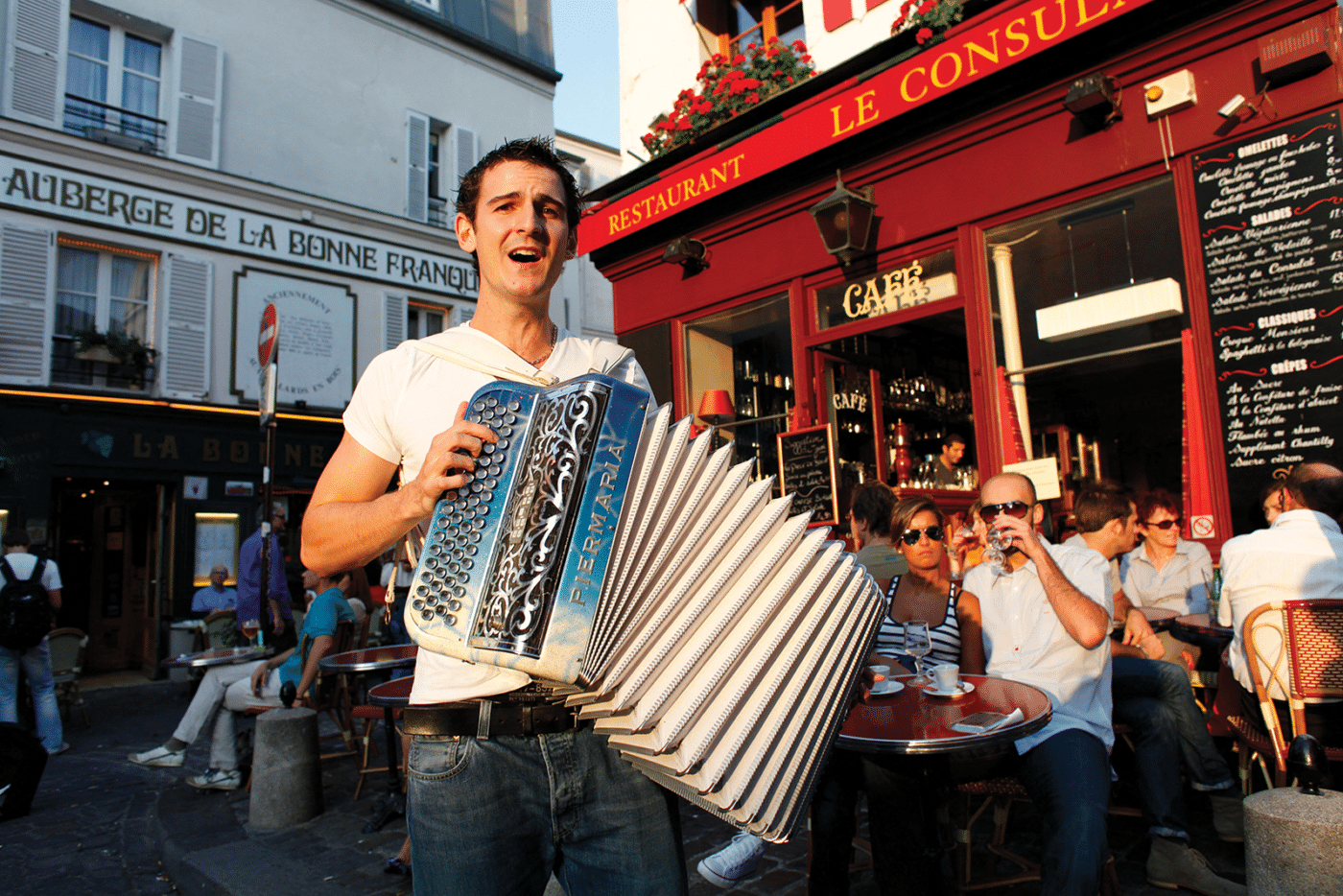
In the bar Aux Noctambules, on Place Pigalle, an old man sits unsteadily on a frayed stool, wearily plying the keyboard of a wobbling Hammond organ, watched by his baleful and ageing Jack Russell terrier. Across the room, ranged on the banquette seating, the Edith Piaf wannabes, Jacques Brel lookalikes and excited drag queens check their look in vanity mirrors and ready themselves for the bar’s infamous open mic night. Farther down the Boulevard de Clichy, at the doors of the Moulin Rouge, the tourists are emerging from the Blanche Métro station and queuing up to get into the iconic music hall, the birthplace of the once-saucy, but now tame, high-kicking cabaret dance, the can-can.
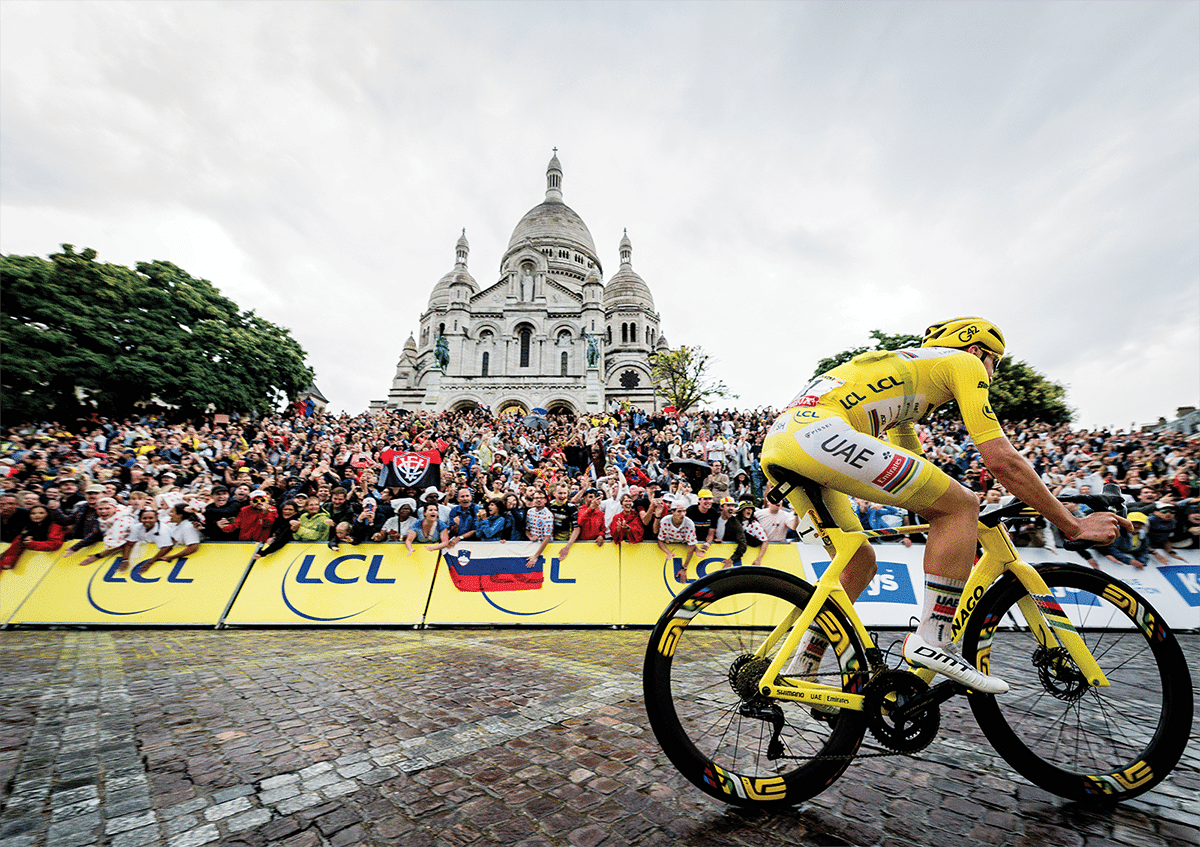
This is old Paris, a creaking hinterland of misfits, mavericks and eccentrics who rarely venture far from the steep, winding teetering streets leading up to the Sacré-Coeur Basilica. The white, domed edifice stands on the ancient bluff of Montmartre, haunt of impoverished poets, artists and writers, waifs and wastrels—and now established, almost overnight, as the most evocative, quirky and downright French stage of the modern Tour de France.
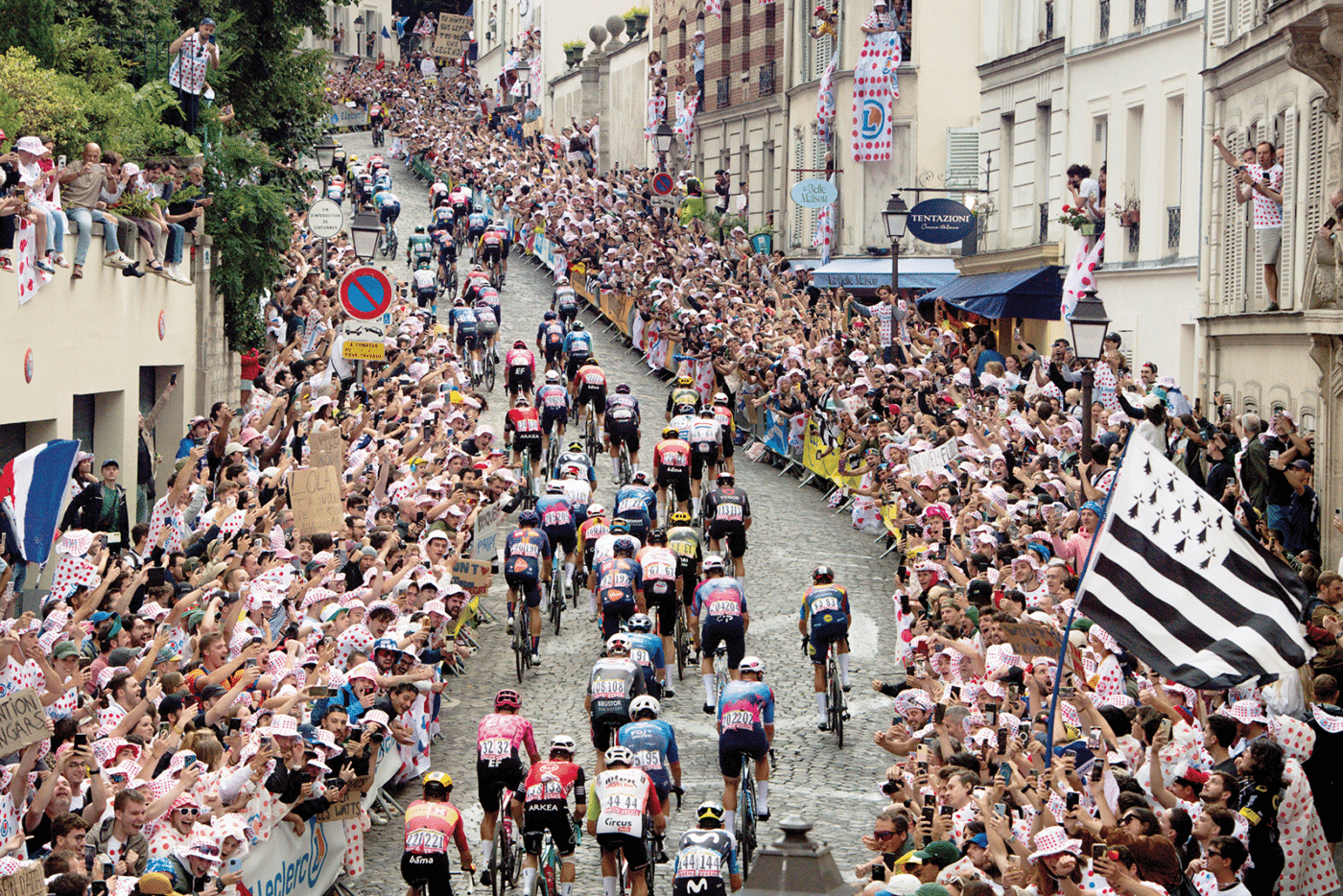
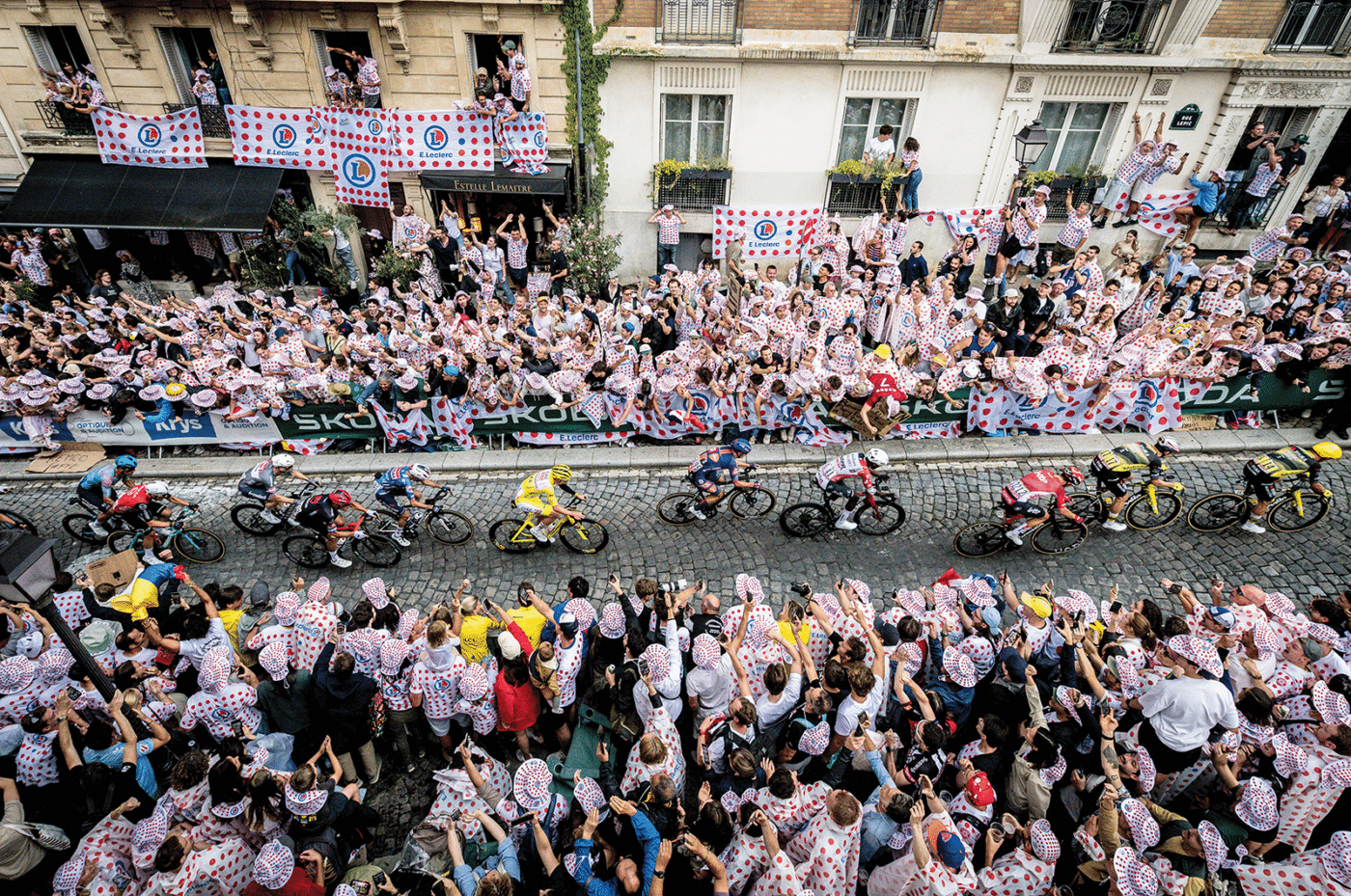
Montmartre is the unlikely backdrop to what was perhaps the wildest, most raucous and definitely the most fun moment of the 2025 Tour: A bumpy, bruising and downright wacky street race that climaxed last year’s Grande Boucle and will be back this coming July. The grumbling beforehand from some in the peloton was washed away by a thrilling stage that even though, due to a downpour, did not count toward the overall standings, produced a gripping duel between Tadej Pogačar and Wout Van Aert.
Routing the Tour through Montmartre also achieved something else, something more profound. It was a reminder of the sheer Frenchness of La Grande Boucle.
But the stage was more than that. It was a reconnection between the contemporary, corporate, sometimes aloof Tour and its historical role as the “people’s race,” a free festival that celebrates French history and culture. The image of a beaming Primož Roglič, arms spread wide, embracing the huge crowds on the Butte de Montmartre has already passed into folklore. “Wow! Quel plaisir,” the Slovenian posted later. In fact, Roglič liked the shot so much that he contacted the photographer, Quentin Joly, and told him that his image captured “the energy and passion that make cycling so special.”
It’s fitting then that an event that captivated Ernest Hemingway and Samuel Beckett, that made its name for its gladiatorial, brutal and extreme nature, will again thunder through streets made famous by artists and writers, past the Moulin Rouge and on, up the cobbles of Rue Lepic, toward the Butte de Montmartre. ASO, promoter of the Tour de France, knows that the Montmartre circuit, first used in the Paris 2024 Olympic road race and reprised last July, has already achieved the televisual cachet of other iconic race locations such as L’Alpe d’Huez, the Arenberg Forest or Mont Ventoux.
GET THE FULL FEATURE IN PRINT


