


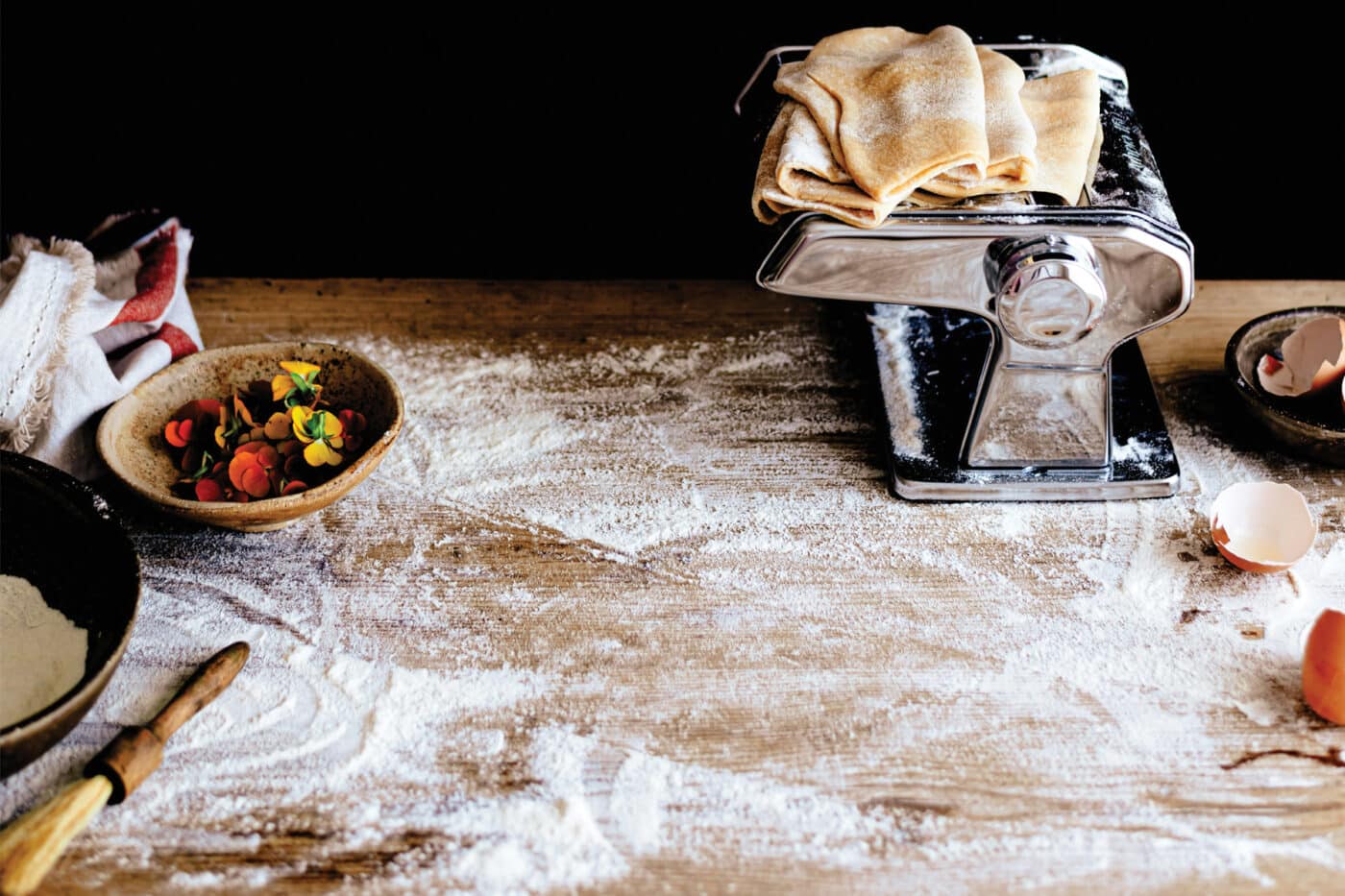
Picture it. A simple plate of pasta that you’ve likely eaten hundreds of times or the dried pasta in the package you buy at the store without really thinking about it. Just two ingredients, flour and water, are mixed well, pushed through a brass die to give it a shape, then allowed to dry. You just boil it in salted water and then you can enjoy it with an endless variety of sauces or toppings. It’s such a common staple that you might take it for granted, but the deceptively simple dried pasta has an amazing history.
First, let’s clear something up. The story of Marco Polo bringing pasta to Italy from Asia is a myth. Pasta developed independently in the Mediterranean, and evidence shows that the Etruscans made pasta-like dishes back in 400 BC in what is now Italy. In medieval times, pasta was all made by hand and two categories of pasta developed simultaneously. Dry pasta was made of durum wheat semolina and known as axutta and fresh pasta was usually made of soft wheat flour and known as bagnatta. Italians learned the art of drying pasta from Arabs in Sicily in the Middle Ages. The Italians surpassed their teachers and Sicily became the cradle of the art of pasta, and drying opened the possibility for pasta to be exported to other regions. In medieval times, dried and preserved products were not respected by the higher echelon of society; they felt that fresh was always better. So, the wealthy ate fresh pasta (often stuffed with meats and cheeses) while the common people ate dried pasta (usually just sprinkled with cheese).
Pasta and cycling have an odd relationship. One would expect pasta, such an important part of Italian culture, would go hand-in-hand with the beloved sport of cycling, especially at the Giro d’Italia.
How did pasta come from its humble beginnings to being a huge part of the food culture around the world, served in millions of homes every day and on the tables of fine dining restaurants all over the globe?
As with most topics in Italy, the history of pasta is the subject of much debate. It is clear, though, that pasta makers in Naples invented a mechanical press in the 1600s to extrude the dough through a mechanical press and brass die. Prior to this, most pasta and the shapes were all made by hand, using a table, rolling pin, a drying rack, a few special knives, a macaroni iron and some unique tools. The use of a mechanical press and a brass die that could extrude the simple flour and water mixture into different shapes, which could be cut to size and then dried for shelf stability, allowed for the large-scale production of pasta. This helped bring Naples out of a severe economic depression. Imports of meat and fresh produce had become expensive, but flour was readily available, and pasta became affordable and abundant.
BUY ISSUE 001


