


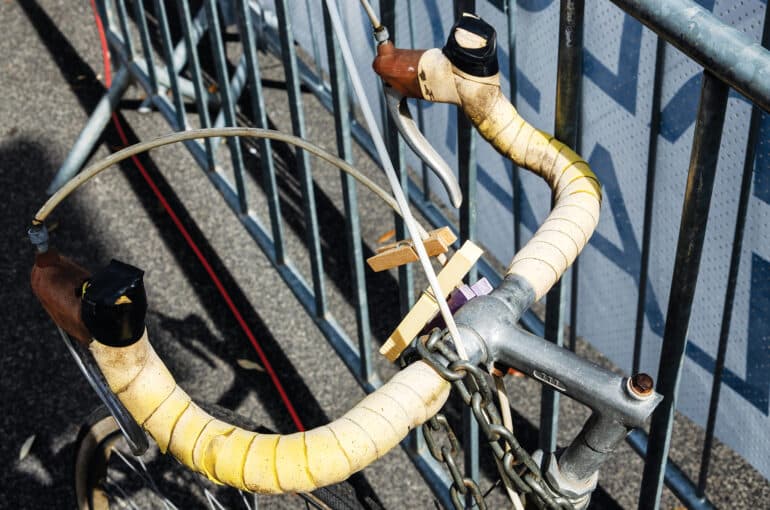
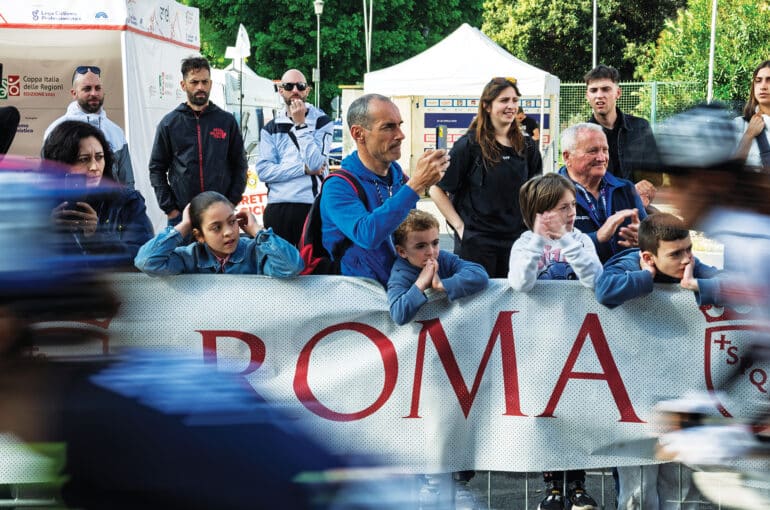
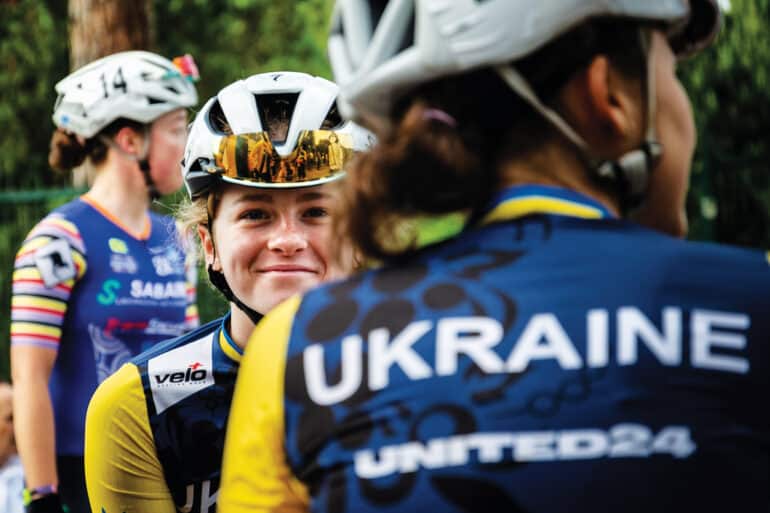
The wheels turn and the asphalt flies beneath the tires, but the spirit of resistance is never left behind.
Under a spring sun caressing the ruins of Rome, the streets fill with bicycles, voices and memory. The Gran Premio della Liberazione is not just a bike race, it is a civic ritual, a tribute to hard-won freedom, inseparably tied to the profound meaning of its name (which translates as “The Liberation Grand Prix”) and its date on the calendar (April 25, the day Italy celebrates its liberation from Nazi-Fascism).
Founded in 1946, one year after the end of World War II, the event honors and commemorates the Italian Resistance. It’s an event that’s celebrated through the effort, lightness, joy and tears of the young riders who speed through the Italian capital. Open to elite women and under-23 men, the race unfolds on a 6-kilometer circuit that embraces the Terme di Caracalla and passes through symbolic sites of resistance and Roman history, including the Porta Ardeatina, Porta San Paolo and Piramide Cestia.
Every pedal stroke echoes the promise to never forget and to always keep fighting and dreaming.
Like the resistance that rose up in Italy during World War II after the armistice of September 8, 1943, it was a movement marked by the unified commitment of diverse and often opposing political forces, all with the goal of liberating the country from Nazi-Fascist rule. The movement also included the so-called “gray zone,” the large portion of citizens who, though unarmed, provided shelter and support to partisans, often hiding them from Nazi reprisals.
It was a resistance over time, too. The Liberazione race has been held annually from 1946, interrupted only by the Covid pandemic, and reached its 78th edition this year. And it still takes place against a backdrop of the Eternal City that itself resists the passage of time, with ancient cobblestones that still shine in all their beauty.
BUY ISSUE 001


