

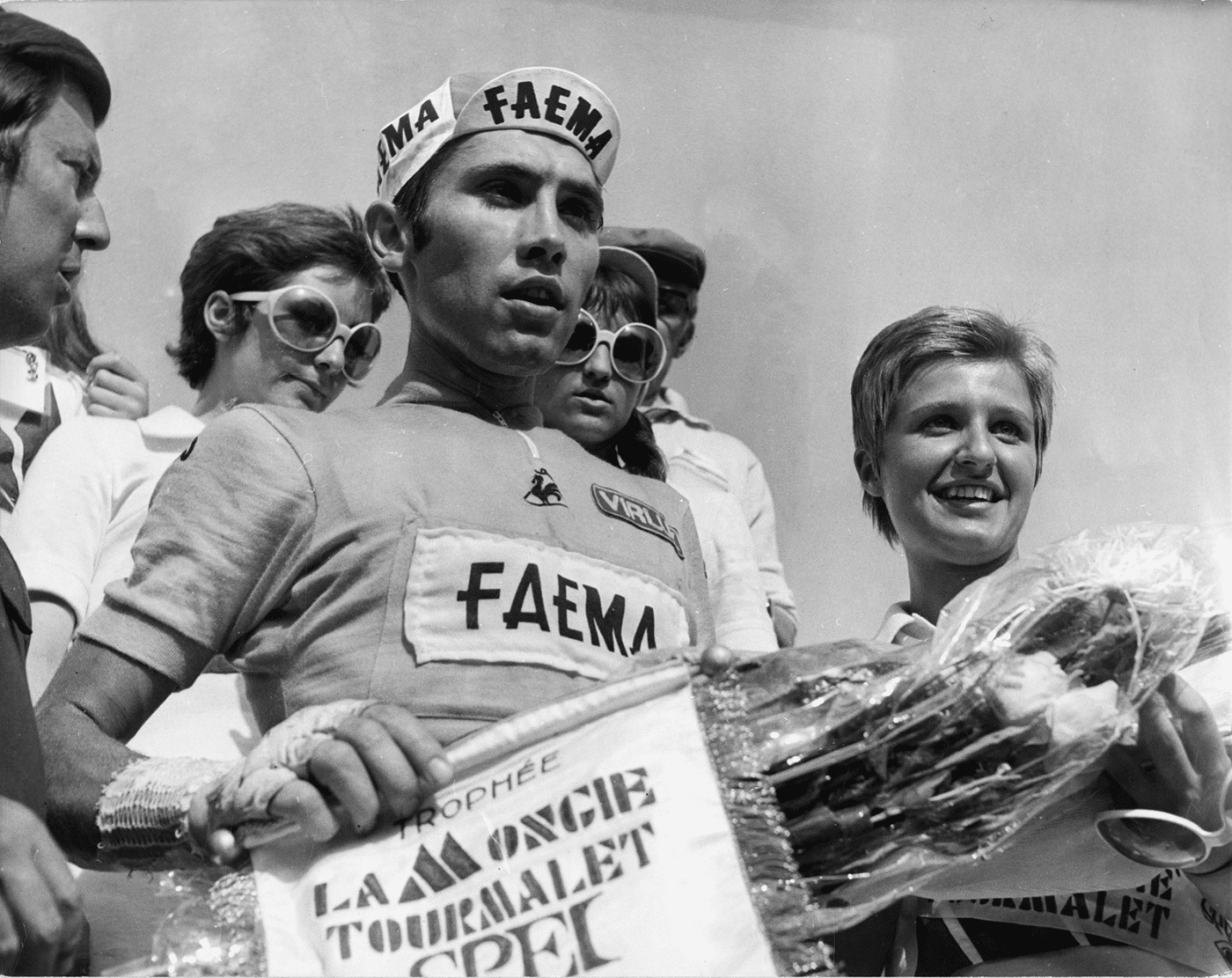
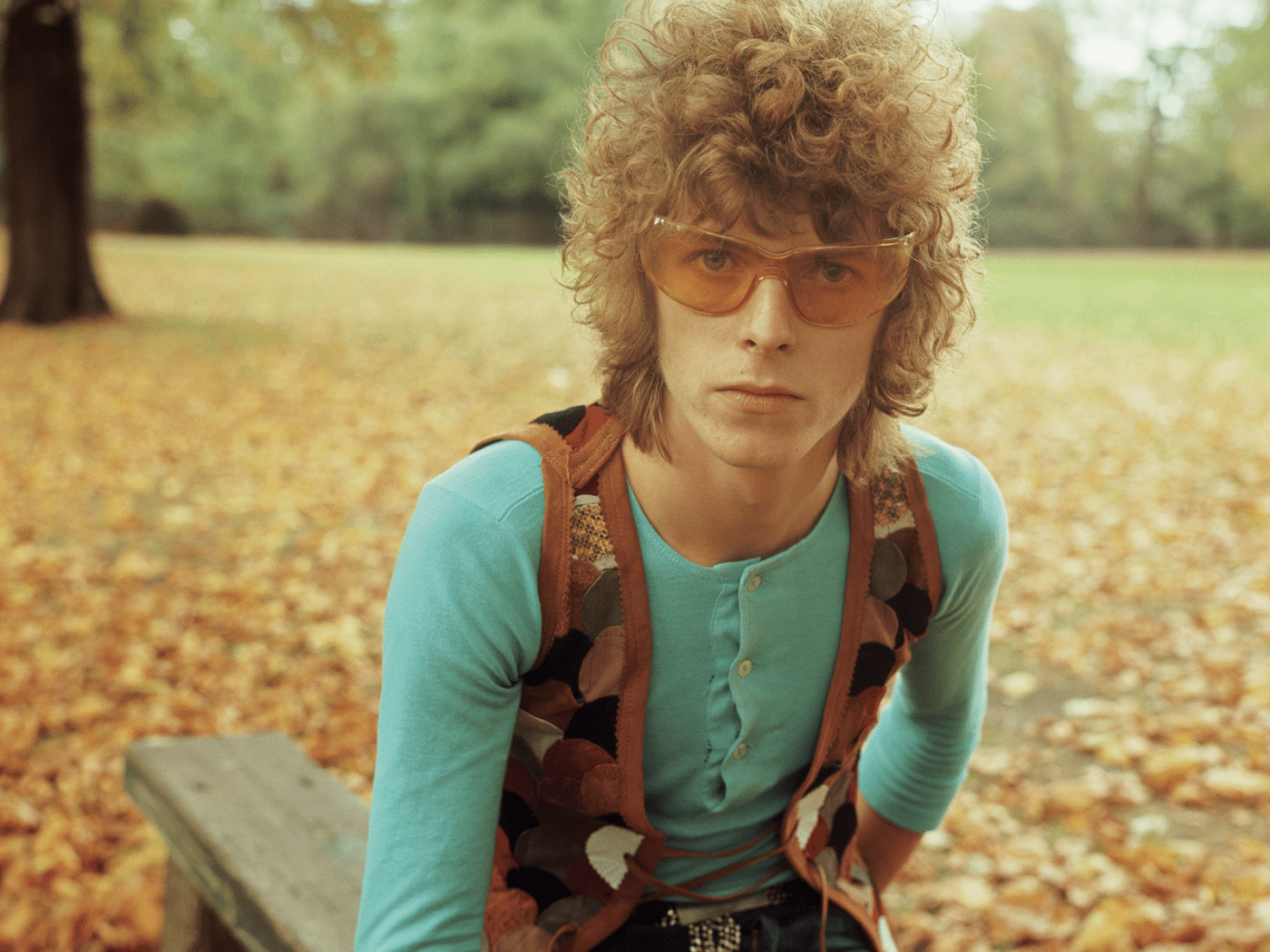
In the spring of 1969, two future legends were undergoing low points in their career trajectories. At the Giro d’Italia, Eddy Merckx was booted from the race for a failed drug test following stage 16 from Parma to Savona. The one-month ban that accompanied the positive meant that Merckx would not be able to make his debut in the Tour de France, which started 26 days later—unless he appealed. At the same time, across the English Channel, an aspiring pop singer named David Bowie was also in crisis. He was feeling despondent about his thus-far unsuccessful career, was depressed from a recent breakup with his longtime girlfriend and had just ended a tour as third on the bill performing poetry and mime, rather than song.
Commenting on his alleged doping infringement, Merckx later said, “It felt as though the whole world was crashing down on me in Savona. It was the greatest instance of injustice I experienced in my whole career.” He appealed the positive test for a mild stimulant, fencamfamine, alleging sabotage, and he was exonerated by the UCI due to “the benefit of the doubt.” So, at the last minute, he was allowed to start the Tour—and he arrived in a vindictive mood. At this point in his career, Merckx already had a plethora of victories, including the 1967 world title, 1968 Giro and multiple classics. But, at age 24, he still hadn’t shown what he could do in the world’s greatest bike race.
The ’69 Tour was a monster, with 10 mountain stages out of 22 total and no rest days. It had been five years since Jacques Anquetil won his fifth and final Tour and professional cycling was seeking its next superstar. Since 1964, the Tour had been won by four different riders. Some were authentic champions like Felice Gimondi, while another was Lucien Aimar, who won in 1966 almost by accident—ending up in a decisive break and then having his team leader Anquetil ride for him to prevent French rival Raymond Poulidor from challenging for the yellow jersey.
Merckx rewrote the books on legendary performances in his first Tour. With the race only halfway through, he’d already won three stages and was seven minutes ahead of his closest GC rival. Merckx had been so dominant that the Tour already seemed over. Then came stage 17 from Luchon to Mourenx, a seven-hour, 214-kilometer trek across the Pyrenees. On the third of four major climbs, the Col du Tourmalet, his Faema team set a relentless pace that allowed him to summit alone.
MORE WITH BOWIE AND MERCKX


